


Dovehaven leaders take centre stage at 20th UK Dementia Congress, showcasing the future of dementia care
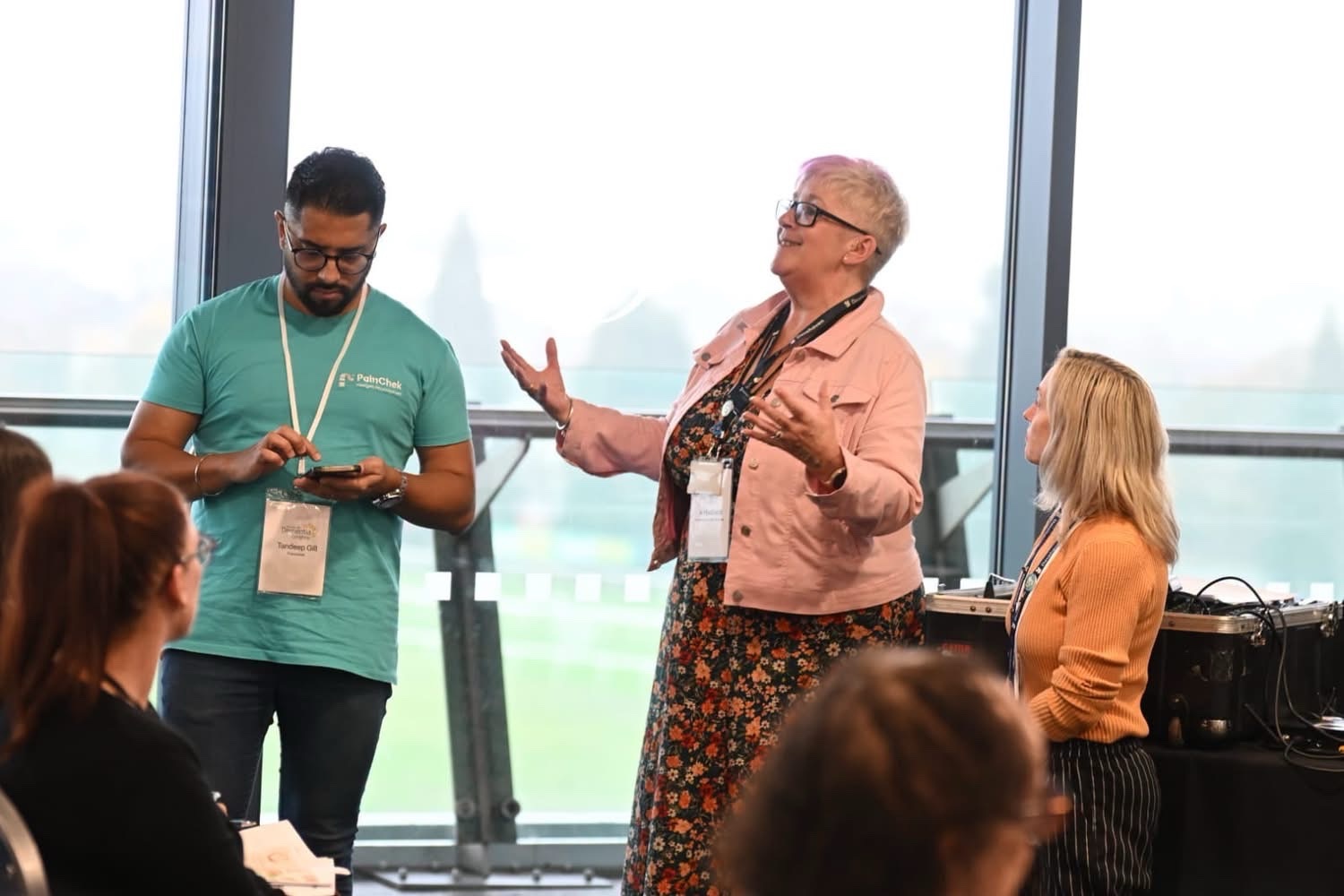

Two of Dovehaven Care Homes' senior leaders are representing the organisation at one of the UK's most significant dementia care events today, sharing how AI-enabled pain assessment has helped transform outcomes for people living with dementia across 23 care homes.
Dovehaven's commitment to improving dementia care is being recognised on a national stage, as Head of Clinical Governance Jo Hadfield-Cubbin and Dementia Lead Krystyna Mitchell present their work at the 20th UK Dementia Congress.
Taking place at Doncaster Racecourse on 17th and 18th November, the milestone event brings together leading voices from across dementia care, including academics, researchers, health and social care professionals, care providers and people with lived experience.
Organised by Dementia Community, publishers of the Journal of Dementia Care, the UK Dementia Congress is the largest annual multidisciplinary dementia-focused event and exhibition in the country. Its 20th anniversary programme provides an important platform for sharing evidence, challenging established thinking and exploring the future of dementia care.
For Dovehaven, being represented at this event is an opportunity to share practical learning from a major programme of clinical innovation, while contributing to wider conversations about how the sector can deliver better outcomes for people living with dementia.
From distress to dignity: Rethinking how we recognise pain
Krys and Jo's presentation, From Distress to Dignity: How AI-Enabled Pain Assessment Transformed Dementia Care Across 23 Care Homes, explores a fundamental challenge in dementia care: recognising when someone is experiencing pain, particularly when they may no longer be able to communicate this verbally.
Changes in behaviour, including agitation, withdrawal, resistance to care or distress, can sometimes be interpreted as behavioural challenges. However, these reactions may be a person's way of communicating that something is wrong. The presentation explores how Dovehaven challenged this traditional approach by asking a different question: rather than simply managing a behaviour, could the person be trying to tell us they are in pain?
Central to this change was the introduction of PainChek®, an AI-enabled digital pain assessment tool designed to support the identification and assessment of pain in people who may struggle to self-report. Rolled out across all 23 Dovehaven services within just three months, the technology enables care colleagues to undertake evidence-based assessments using handheld smart devices. Combining AI facial analysis with human observation across six areas – face, voice, movement, behaviour, activity and body – PainChek® supports colleagues to identify potential pain, take appropriate action and reassess the person's response.
Importantly, the technology was not introduced as a standalone solution. It became part of everyday care practice, supported by clinical governance, workforce training and clear processes for assessment and intervention.
The results: More than 165,000 assessments and measurable improvements
The impact of the programme is demonstrated through the data shared in Krys and Jo's presentation on 18th November.
Between July and December 2024, Dovehaven completed more than 165,000 PainChek® assessments, with significant improvements recorded across pain levels, distress and medication use.
The results included:
- 67% reduction in severe pain.
- 42% reduction in moderate pain.
- 25% reduction in mild pain.
- 41% reduction in distress incidents.
- 58% reduction in resident-to-resident altercations.
- 58% reduction in overall benzodiazepine use.
There were also notable improvements in specific distress-related behaviours, including a 70% reduction in crying, a 75% reduction in screaming and an 85% reduction in resistance to care.
The programme also supported a significant change in medication practice. The proportion of residents prescribed PRN benzodiazepines reduced from more than 20% to just 2.8%, with a PainChek® assessment required before PRN benzodiazepine administration. These figures demonstrate how better recognition and management of pain can have wider implications for residents' wellbeing, the delivery of care and the use of medication.
Looking beyond pain: The wider impact on resident wellbeing
The presentation also explores how proactive pain management can influence other aspects of care. A targeted project involving 59 residents with knee osteoarthritis introduced four pain assessments each day over six months. The project achieved a 70% reduction in falls among this group. Across the wider programme, Dovehaven also recorded a 45% reduction in falls, alongside a 36% reduction in emergency ambulance callouts and a 50% reduction in hospital admissions following falls.
This demonstrates the importance of looking beyond individual symptoms and understanding how pain, distress, mobility, medication and overall wellbeing can be connected. By identifying and addressing pain earlier, care teams have greater opportunities to intervene proactively, potentially preventing avoidable distress and reducing the need for more reactive interventions.
Technology is only part of the transformation
A key message from Krystyna and Jo's presentation is that technology alone did not deliver these improvements. The transformation relied on people, training, data, governance and clinical leadership working together.
Embedding PainChek® across 23 services required colleagues at every level to understand not only how to use the technology, but why recognising pain matters and how the results should inform individual care. It also required a change in mindset: moving away from assumptions about behaviour and towards a more curious, evidence-led approach to understanding what a person might be experiencing.
This is an important part of Dovehaven's wider approach to person-centred care. Innovation should always have a clear purpose, and that purpose must be improving the lives of the people who live in our homes.
Sharing learning and shaping the future of dementia care
Presenting at the UK Dementia Congress gives Jo and Krystyna the opportunity to share Dovehaven's experience with a national audience, contribute to professional discussion and demonstrate what can be achieved when innovation is supported by strong clinical leadership and a committed workforce.
Their session forms part of Parallel Session 4, Technology, Taboos and Open Conversations, taking place today, Wednesday 18 November, from 12pm to 1.10pm.
The invitation to present reflects the value of sharing practical experience from within care services, particularly where organisations can demonstrate measurable outcomes and meaningful learning that others can take forward.
For Dovehaven, this is about more than showcasing a successful project. It is about contributing to the development of dementia care, being open about what works and helping other organisations consider how they can make improvements within their own services.
We are incredibly proud to see Jo and Krystyna representing Dovehaven on this platform and sharing the work of colleagues across our 23 homes. Their presentation is a great example of thought leadership in action – challenging established approaches, embracing innovation and keeping the dignity, comfort and quality of life of the people in our care at the heart of everything we do.
Find out more about the UK Dementia Congress and read the full presentation proposal, From Distress to Dignity: How AI-Enabled Pain Assessment Transformed Dementia Care Across 23 Care Homes.
Lucie Drakeford
Communications & Marketing Manager


