


Why Language Matters in Dementia Care: Reflections on Stigma, Dignity and Person-Centred Care


The language we use around dementia can shape perceptions, influence care, and affect the dignity of people living with the condition. In this reflection, I explore how everyday words and phrases can contribute to dementia stigma, why person-centred language matters, and how small changes in communication can make a meaningful difference.
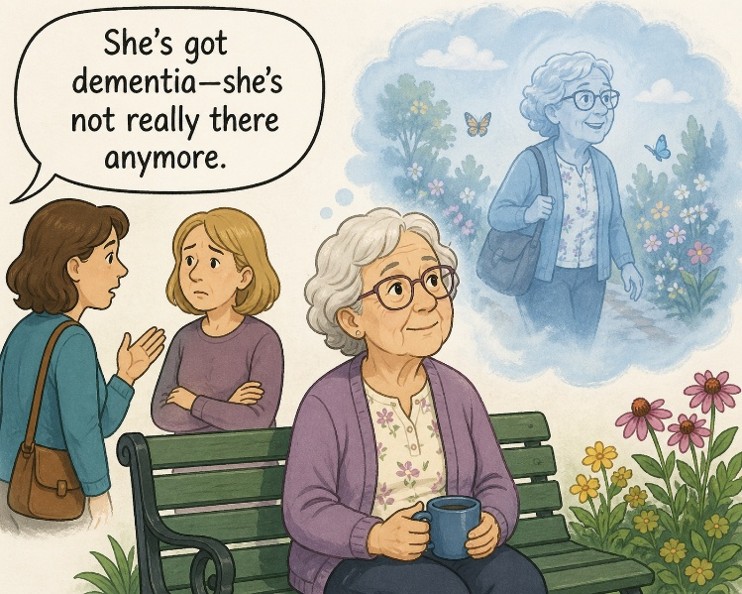
I’ve heard phrases like this more than once, and if I’m honest, I don’t think people usually mean any harm when they say it. It often comes from a place of sadness, or not really knowing how else to describe what’s happening. But the more I’ve learned about dementia, the more uncomfortable I’ve become with language like this.
Because words don’t just describe dementia—they shape how we think about it, and how we treat people living with dementia in everyday life and dementia care settings.
This blog isn’t about how to communicate with someone who has dementia. Instead, it’s about something that feels much easier to overlook: the everyday language used around dementia. The kind of language that becomes so normal we stop noticing it. And yet, it can have a real impact on people’s dignity, relationships, and overall wellbeing.
The problem isn’t always obvious
When we talk about “stigmatising language,” it’s easy to think of obviously offensive words. Terms like “demented” or “vegetative” stand out straight away as inappropriate. But actually, a lot of the language that does the most damage is much more subtle than that.
It’s the phrases people say without really thinking:
- “Dementia sufferer”
- “She’s gone”
- “He’s just a shell”
- “They’re like children again”
I’ve probably heard all of these at some point, and they’re often said in a sympathetic way. But when you look a bit closer, they all do the same thing—they take away something of the person and replace it with the condition.
If we embrace the idea that even as dementia progresses, the person is still there—they still have identity, emotions, and value, this impacts the language we use. Language that suggests someone has “gone” completely goes against this, and can change how others respond to them.
In dementia, it feels like language is a big part of how some can be reduced to a single, negative identity and that often happens without people realising it.
When language becomes part of everyday care
One thing I’ve noticed is how certain words just become part of the routine in care settings.
For example, terms like “bibs” and “doubles” are used all the time. Staff might say someone “needs a bib” at mealtimes, or refer to those needing the assistance of two staff members as “doubles.” It’s usually just shorthand—quicker, easier, and understood by everyone.
But when you stop and think about it, “bib” is a word most people associate with babies. Using that term for an adult doesn’t sit quite right. It can come across as infantilising, even if that’s not what was intended.
The same goes for “doubles.” It turns something quite personal into a kind of task label. The focus shifts from the person to what needs to be done for them.
Care can become task-focused, especially when staff are under pressure. I think language plays a bigger role in that than we sometimes realise. If the language is task-based, the care can start to follow the same pattern.
“Kicking off”: just a phrase… or something more?
Where I’m from, and in places like Liverpool especially, it’s a really common expression. People use it all the time to describe someone being upset or angry, and it doesn’t necessarily feel harsh in everyday conversation.
But in a dementia care context, it can feel quite different.
When someone living with dementia becomes distressed, there’s usually a reason behind it. They might be in pain, confused, overwhelmed, or trying to communicate something they can’t quite put into words. Behaviour is often a form of communication.
Describing that as “kicking off” can make it sound like the person is just being difficult or causing trouble. And I think that can influence how people respond, even if it’s not intentional.
What makes this more complicated is that staff who use this phrase regularly might not see any issue with it at all—it’s just part of how they speak. That’s where reflection becomes really important, because not all problematic language is obvious, especially when it’s shaped by local culture.
Talking over people: “It doesn’t matter, she can’t understand”
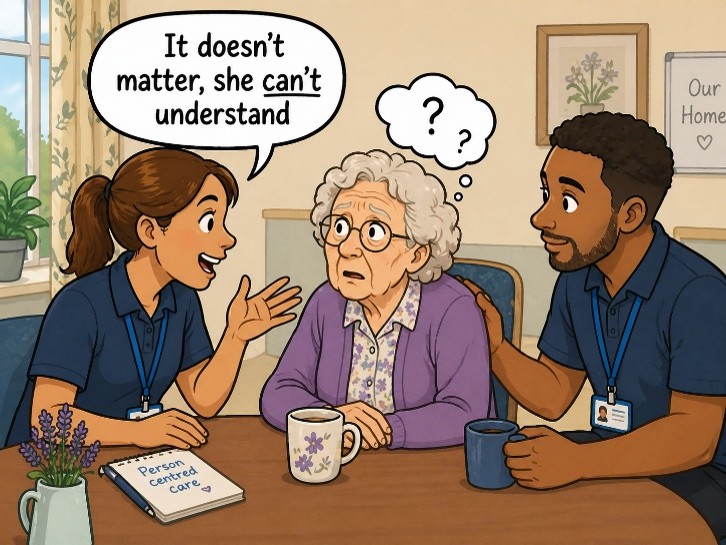
This is probably the area I’ve found most uncomfortable to think about.
There are situations where staff are working together—helping someone with personal care, for example—and they talk to each other over the person. Sometimes that includes comments like, “It doesn’t matter, she can’t understand.”
Even if it’s not meant in a negative way, it makes a big assumption.
The evidence suggests that many people living with dementia still have emotional awareness and can often understand more than they’re able to express. They might not follow every word, but they can pick up on tone, body language, and how they’re being treated.
If you imagine being in that situation yourself—people talking about you, around you, as if you’re not there—it’s not difficult to see how that could feel.
The way people are treated can actually undermine their sense of self and over time, that can lead to withdrawal or distress.
It also affects relationships. Communication in dementia care is about more than just information—it’s about connection. When someone is left out of conversations about their own care, that connection starts to break down.
The bigger picture: how language shapes perception
What happens in care settings doesn’t stay there. It links to how dementia is talked about more widely.
In the media, dementia is often described in very negative terms—words like “crisis,” “burden,” or even “living death” are used. These kinds of messages can be powerful, but they also create a very narrow picture of what dementia is.
For families, this can be overwhelming. It can shape expectations before they’ve even had time to understand the condition properly. These narratives can increase fear and stigma, and even lead to people withdrawing socially.
Dementia stigma is a major barrier to improving dementia care and supporting people to live well with the condition. One thing I’ve noticed is how certain words just become part of the routine in dementia care settings. Language is a big part of that—it can either reinforce negative attitudes or start to challenge them.
So what needs to change?
I don’t think this is about suddenly banning certain words or expecting people to get everything right all the time.
It’s more about awareness.
Small changes in dementia care language can make a difference:
- Saying “person living with dementia” instead of “sufferer”
- Speaking directly to someone rather than about them
- Thinking twice about words like “bibs” or “kicking off”
- Trying to understand behaviour rather than label it
People with dementia should be seen as individuals with rights and voices, not just as patients. That shift in thinking starts, in many ways, with language.
More than words: why language really matters
The more I reflect on this, the more I realise that language isn’t just something that sits alongside care—it actively shapes it. The words we use influence how we see people, and in turn, how we respond to them. Over time, those responses become habits, and those habits begin to form the culture of care itself. What can feel like “just a phrase” in a busy moment can, when repeated often enough, become part of a much bigger pattern.
What feels particularly important is that language doesn’t only affect staff or families—it also affects the person living with dementia. Even as communication changes, many people retain a strong level of emotional awareness. They may not follow every word that’s said, but they can often sense tone, intention, and whether they are being included or overlooked. Research has consistently shown that a person’s sense of self is not simply lost with cognitive decline, but is shaped through ongoing interaction with others.
There’s also a wider influence at play. The language used in everyday conversations feeds into broader social perceptions of dementia and people living with dementia. If dementia is consistently framed in terms of loss, burden, or inevitability, it can shape expectations long before someone has any direct experience of it. This kind of narrative has been linked to increased stigma and fear, not just for individuals but for families as well. In that sense, language doesn’t simply describe dementia—it helps to construct the reality people come to expect.
I think this is why even small shifts in wording can matter. Not because they change everything overnight, but because they begin to challenge those underlying assumptions. For example, describing someone as “living with dementia” rather than “suffering from it” doesn’t ignore the difficulties involved, but it avoids defining the person entirely by their condition. Similarly, moving away from task-based phrases towards more person-centred language can help maintain a sense of dignity and involvement, even in routine care.
At the same time, it’s important to acknowledge the reality of care environments. Staff are often working under significant pressure, and language naturally becomes quicker, more informal, and shaped by the need to communicate efficiently. Many of the phrases that raise concern aren’t used with negative intent—they’re part of a shared shorthand that develops over time. Recognising that context matters, because this isn’t about blame. It’s about reflection.
For me, it comes back to awareness and intention. Taking a moment to notice the words we use—and being open to adjusting them—can make a meaningful difference. It might not seem significant in isolation, but over time those small changes can influence how people are perceived and treated.
Because ultimately, language is never neutral. It either supports personhood, or it risks eroding it, often in ways that are easy to miss. And when you start to see it like that, it becomes much harder to dismiss words as “just words.”
A personal reflection
Writing this has definitely made me think more about the language I hear—and probably use myself at times.
In busy environments, it’s easy to pick up the same phrases as everyone else. You don’t always stop and question them. But I think that’s exactly why it matters.
Because once something becomes normal, you stop noticing it.
For me, the biggest takeaway is the need to pause and reflect. Even small changes in how we speak could have a bigger impact than we realise, especially when it comes to dignity and respect in care.
Final thoughts
Dementia is often talked about in terms of memory loss or decline, but the social side of dementia—the way people are treated, included and supported—is just as important.
Language plays a huge role in that.
It shapes how people are seen, how they’re treated, and even how they see themselves. Stigmatising language can reinforce negative assumptions and create distance, even when that’s not the intention.
Becoming more aware of the words we use isn’t about being perfect—it’s about being thoughtful.
Because in the end, this isn’t just about language.
It’s about how we value people.
Krystyna Mitchell
Dementia Lead